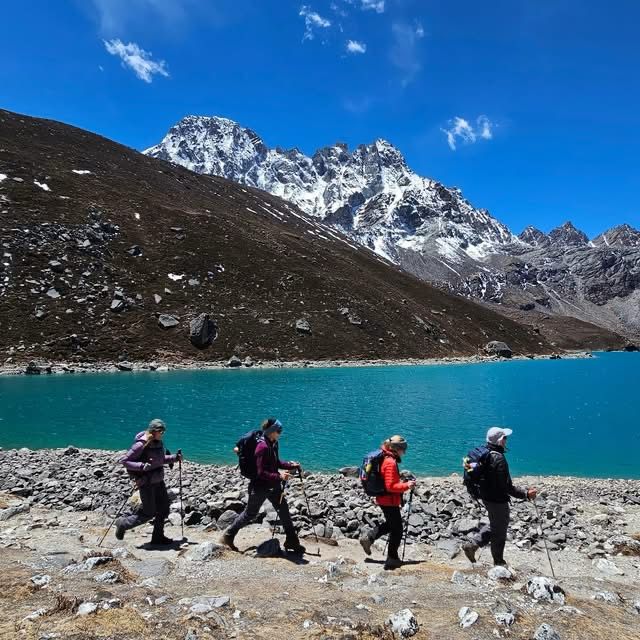
Nepal remains open to foreign tourists and travellers despite the devastating Bhote Koshi River floods that have caused extensive damage in parts of Rasuwa, Nuwakot, Dhading and Chitwan, the Ministry of Foreign Affairs has said.
The government has urged international travellers not to cancel plans to visit Nepal solely because of the disaster, stressing that while the affected areas are facing a major emergency, other parts of the country continue to operate normally and remain open to foreign nationals, travellers and tourists.
The income that toursim brings, will be vital to bebuilding devasted communities.
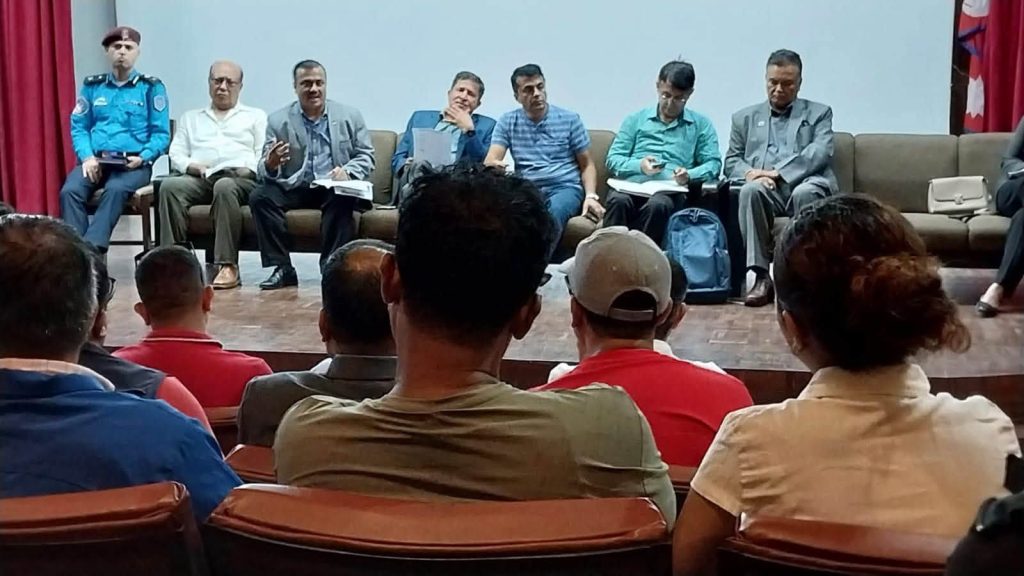
At a press briefing in Kathmandu, the Ministry of Foreign Affairs confirmed more than 4,450 people had been rescued from the flood-affected areas, including more than 187 foreign nationals. A total of 626 bodies have been recovered, while around 2,400 people remain missing.
The figures were provided as the government continues large-scale search, rescue, relief and recovery operations following the flash floods in the Bhote Koshi River on 26th August. The ministry cautioned that the figures relating to casualties, missing persons and damage could change as search and verification operations continue.
For tourists and their families, the government said its immediate priority is to locate missing people, rescue those who may be stranded, provide emergency assistance to survivors and ensure that both Nepali and foreign nationals receive necessary support.
Search and rescue teams comprising security personnel, provincial and local government authorities, medical teams and emergency responders are working continuously across the affected districts. Authorities are also coordinating with families, local administrations, hospitals and other concerned agencies to verify the identities and whereabouts of missing nationals before information is released publicly.
The government has also established a dedicated Emergency Control Room at the Ministry of Foreign Affairs to deal with cases involving foreign nationals. Nepal’s diplomatic missions abroad are coordinating with relevant authorities, sharing verified information with families and facilitating communication, identification and repatriation procedures where necessary.
The government is seeking specialised international assistance to strengthen search and rescue operations, particularly in areas where people may be trapped in tunnels or other difficult locations. Assistance has been requested for technologies capable of detecting survivors, rapid forensic and DNA analysis and mortuary facilities for recovered bodies.
An 11-member specialised technical reconnaissance team from India has already been mobilised to assist with tunnel rescue operations, while a tunnel rescue team from China is expected to arrive soon, according to the ministry.
Relief operations are also continuing in the affected areas, with emergency medical care, food, safe drinking water, temporary shelter and other essential supplies being provided to survivors. Nepal has already received more than 57 tonnes of relief materials from India, while essential supplies are also being received from China, Japan, Australia and other international partners.
The Ministry of Foreign Affairs said the government is conducting a detailed assessment of damage to critical infrastructure, including houses, roads, bridges and hydropower facilities. Given the scale of destruction, Nepal expects to require international assistance for rehabilitation and reconstruction once the assessment is completed.
The ministry also rejected reports circulating in some national and international media claiming that Nepal had refused international assistance. It said Nepal needs support not only for the immediate rescue and relief phase but also for longer-term rehabilitation and reconstruction.
For the tourism industry, however, the government’s message was clear: Nepal remains open.
Despite the destruction caused by the Bhote Koshi floods in parts of Rasuwa, Nuwakot, Dhading and Chitwan, the government said other parts of Nepal are functioning normally and remain open to foreign travellers and tourists. It has welcomed international visitors who wish to continue with their travel plans.
The government is continuing to monitor river systems and downstream flood risks and has kept its emergency response systems on high alert for possible additional flooding. Travellers are advised to follow official safety information and avoid entering disaster-affected areas unless authorised or accompanied by relevant authorities.
The government has also appealed to the public and international media to rely on officially verified information, warning against the circulation and publication of unconfirmed reports while search, rescue and verification operations remain underway.
Nepalis and foreign nationals wishing to contribute to relief efforts can donate to the Prime Minister Relief Fund.
The government said it appreciates offers of material assistance from international organisations and individuals, although it currently has limitations on accepting additional material donations.
The Ministry of Foreign Affairs said it will continue providing updates through its official website, social media channels and further media briefings as the situation develops.

Author: George Shaw
Former BBC journalist and founder and CEO of an award-winning London advertising and PR company for 20 years, providing restaurant consultancy services. Spent a decade as the director of communications of the Asian Catering Federation in the UK and lead judge for its various restaurant and chef awards programmes. Now returned to journalism, specialising in food and travel and currently the Editor-in-Chief for Taste London, Taste Asia, the Good Curry Guide and CEO of International Culinary Guides.